
Precision ADAS Camera Calibration Services in Phoenix
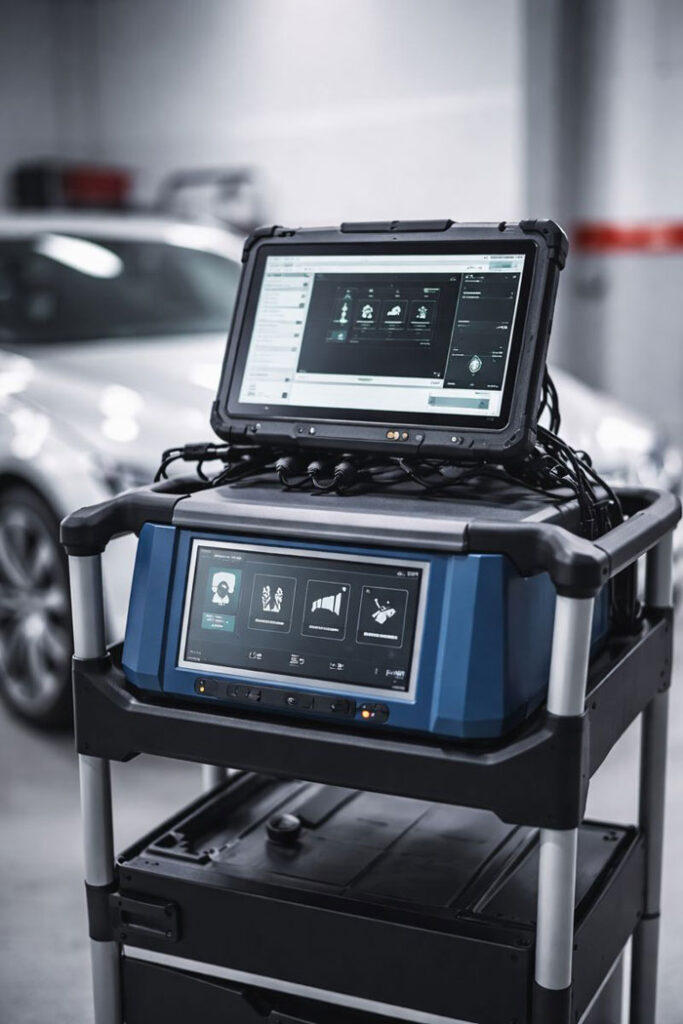
Modern safety features like Lane Departure Warning and Automatic Emergency Braking rely on precise camera alignment. After any windshield replacement, recalibration is essential. We use industry-leading diagnostic tools to ensure your vehicle’s ADAS sensors meet OEM specifications.
Don’t compromise on safety—our certified technicians provide both static and dynamic calibration to keep your advanced safety systems functioning perfectly.
Your safety is our top priority. In modern vehicles, your windshield is more than just glass—it’s a mounting point for advanced safety sensors. When we replace your windshield, we ensure your vehicle’s ADAS (Advanced Driver Assistance Systems) are recalibrated to factory standards.
What is ADAS Calibration and Why is it Non-Negotiable?
Windshield Calibration, sometimes called windshield camera recalibration, is the process of precisely realigning and restoring the function of your vehicle’s safety systems after a change to the windshield or suspension.
- Windshield replacement
- Front-end collision repairs
- Camera or sensor replacement
- Certain suspension or alignment repairs
- Lane Keep Assist may not accurately detect lane markings
- Collision warning systems may respond incorrectly
- Automatic Emergency Braking may not operate as designed
- The vehicle may display ADAS warning messages
- Safety features may become unavailable
The Problem with Millimeters
The core issue is precision. ADAS systems, such as Lane Departure Warning (LDW), Automatic Emergency Braking (AEB), and Adaptive Cruise Control (ACC), use a forward-facing camera to “see” lane lines, vehicles, and objects. If the windshield is replaced, even the smallest shift—a fraction of a millimeter—in the camera’s angle can translate to an error of several feet when detecting an object 50 feet ahead. This misalignment means:- Lane Assist could steer you out of your lane.
- Collision Warning could trigger too late—or not at all.
- The system might generate false error codes or shut down completely.
Calibration ensures the camera’s line of sight is perfectly aligned with the vehicle’s center line and the manufacturer’s OEM (Original Equipment Manufacturer) specifications.
Types of Calibration: Static vs. Dynamic
Modern vehicles require one of two primary types of calibration, and sometimes both, depending on the manufacturer (e.g., Ford, Toyota, Tesla, BMW) and the specific system:1. Static Calibration (In-Shop)
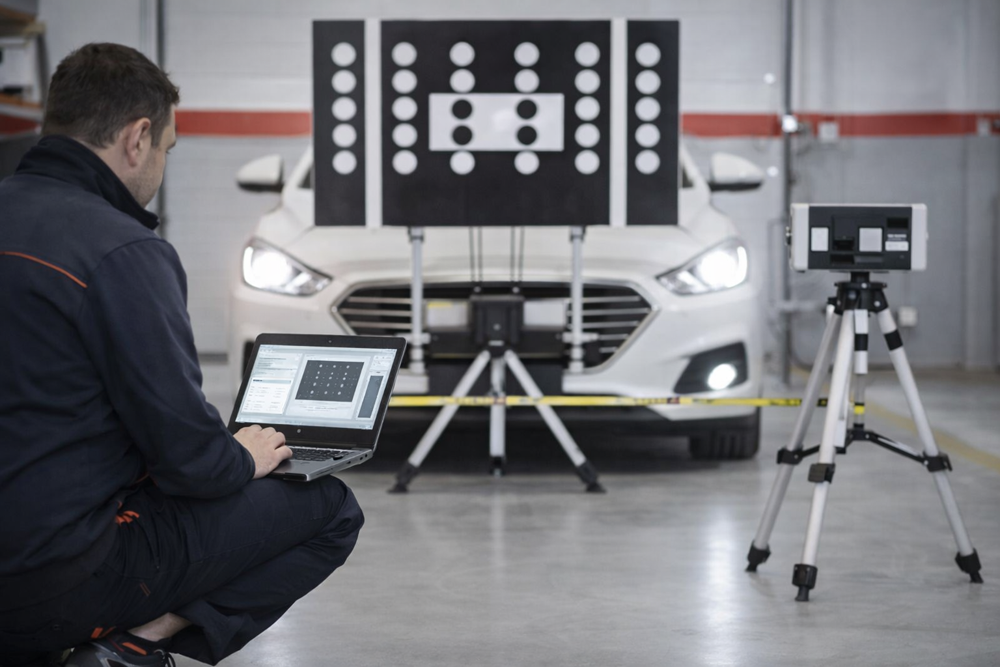
- What it is: Performed with the vehicle stationary, typically inside a climate-controlled auto glass facility.
- How it works: Highly specialized targets (patterns, charts, and boards) are placed at precise distances and angles around the vehicle. Technicians use advanced diagnostic software to communicate with the camera and “teach” it to recognize these targets as its reference point.
- Phoenix Advantage: Performing this indoors protects sensitive equipment and ensures the process is not disrupted by the intense Phoenix heat, glare, or wind.
2. Dynamic Calibration (On-Road)
-
- What it is: Performed while the vehicle is being driven by a certified technician under specific conditions.
- How it works: The vehicle must be driven at a set speed (often between 20-60 mph) on well-marked, straight roads for a designated period (sometimes up to 45 minutes). The system automatically uses real-world visual data (lane markings, road signs) to recalibrate itself.
- Requirement: The weather must be clear, and the road conditions must meet the manufacturer’s exact specifications.
Our Comprehensive ADAS Services in the Valley
At High Tech Auto Glass, we provide both types of essential calibration:
Static Calibration: Performed in a controlled environment using specialized targets and equipment.
Dynamic Calibration: Involves driving the vehicle at specific speeds to allow the sensors to “learn” and align with the road.
Why Choose High Tech Auto Glass for ADAS?
Certified Technicians: Our team is trained in the latest recalibration technology.
Precision Tools: We use industry-leading diagnostic equipment for all vehicle makes and models.
Safety Guaranteed: We don’t consider the job done until your sensors are 100% accurate.
Is ADAS Calibration Covered by Insurance?
Many drivers are surprised to learn that ADAS recalibration is typically covered under the same glass insurance claim as the windshield replacement itself. Since it is a manufacturer-required safety procedure, Arizona insurance companies recognize its necessity. We work directly with major insurance providers to handle the paperwork so your safety systems are restored without added stress.
Schedule Your Service Today
Don’t compromise on safety. If you need a windshield replacement in Phoenix and your car has safety sensors, we are the experts you can trust.
Frequently Asked Questions About ADAS Calibration
Do I need ADAS calibration after every windshield replacement?
If your vehicle has a forward-facing camera mounted on the windshield (used for lane-departure warning, automatic emergency braking, or adaptive cruise control), yes — the camera must be recalibrated any time the windshield is replaced, since even a millimeter of misalignment can throw off how the system reads the road.
What’s the difference between static and dynamic calibration?
Static calibration is performed in-shop using target boards and precise measurements in a controlled environment. Dynamic calibration is performed by driving the vehicle on the road at a specific speed so the camera can self-calibrate against real-world lane markings. Many vehicles require both.
How long does ADAS calibration take?
Static calibration typically takes about an hour once the space is set up correctly. Dynamic calibration adds additional time for the road drive. We factor this into your appointment window so there are no surprises.
Is ADAS calibration covered by insurance?
In most cases, yes — most Arizona insurance carriers recognize ADAS calibration as a necessary part of a windshield replacement and cover it accordingly. We work directly with your insurer to handle the paperwork.
What happens if I skip calibration after a windshield replacement?
Your safety systems may misread lane position, distance to other vehicles, or braking timing, which can trigger false warnings or fail to activate when needed. We don’t recommend driving with an uncalibrated ADAS camera.
Which vehicles need ADAS calibration?
Most vehicles made after roughly 2018 include some form of camera-based safety system, but it varies by manufacturer and trim level. Tell us your vehicle’s year, make, and model when you call, and we’ll confirm exactly what your vehicle needs.
